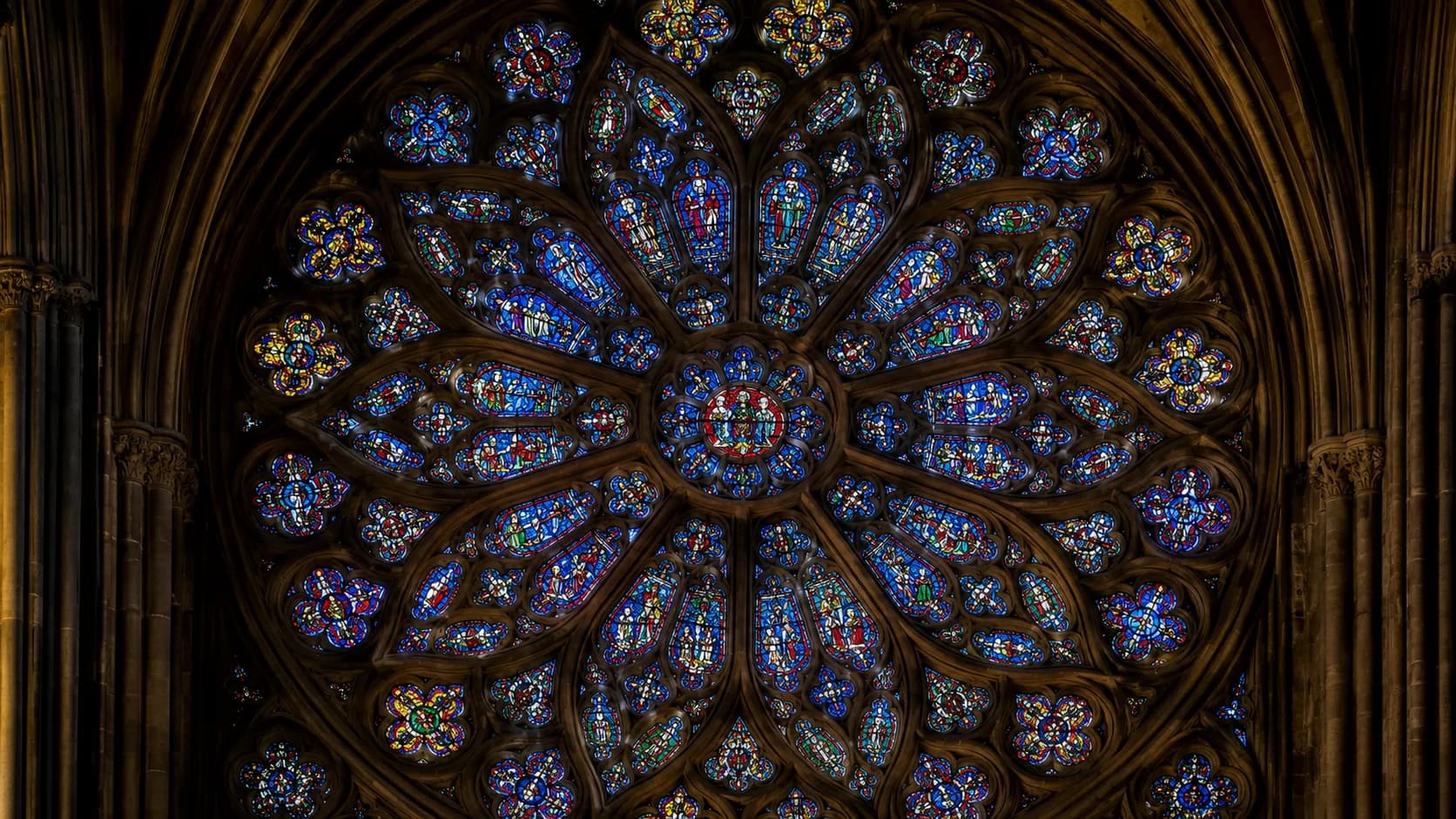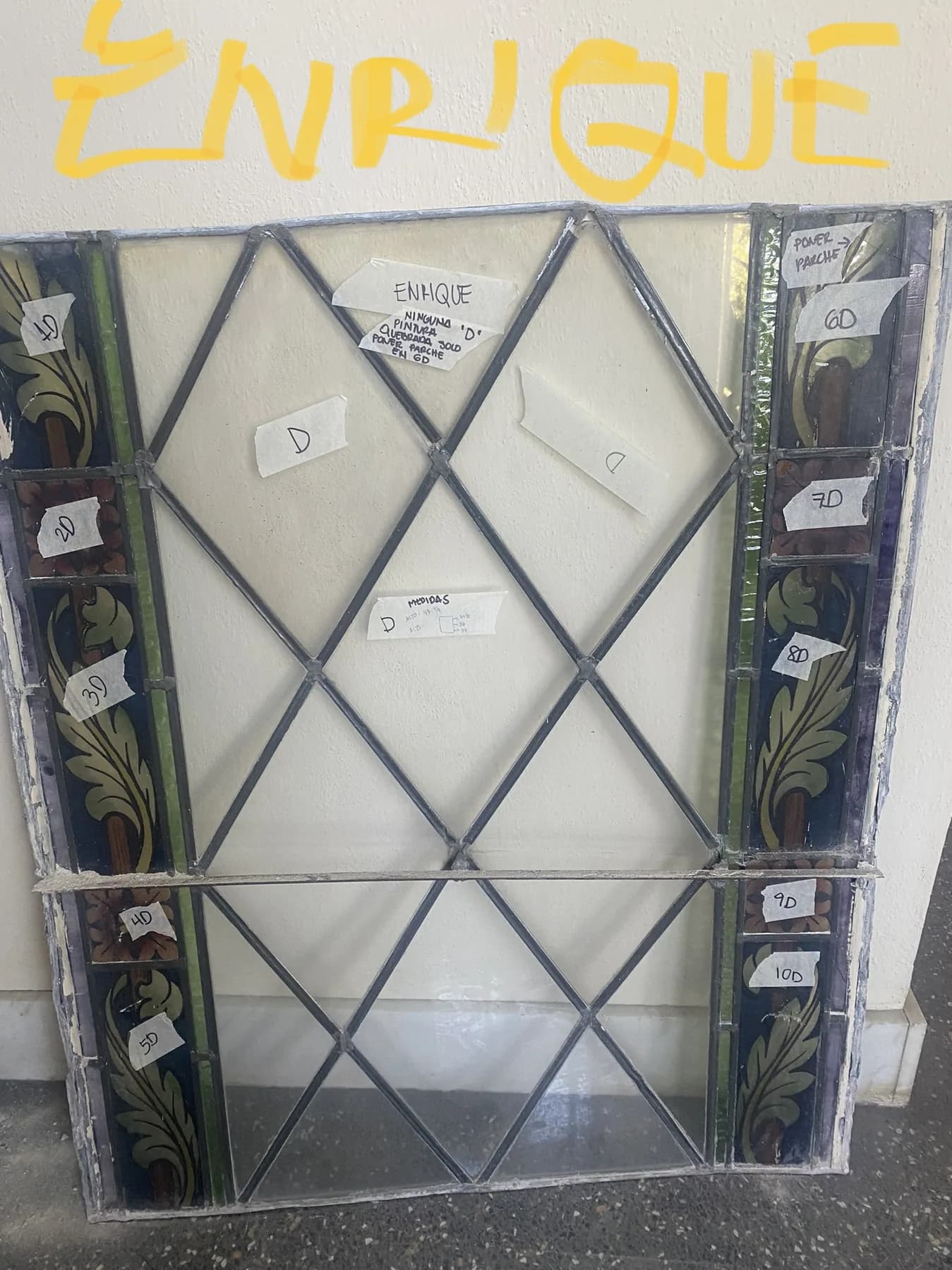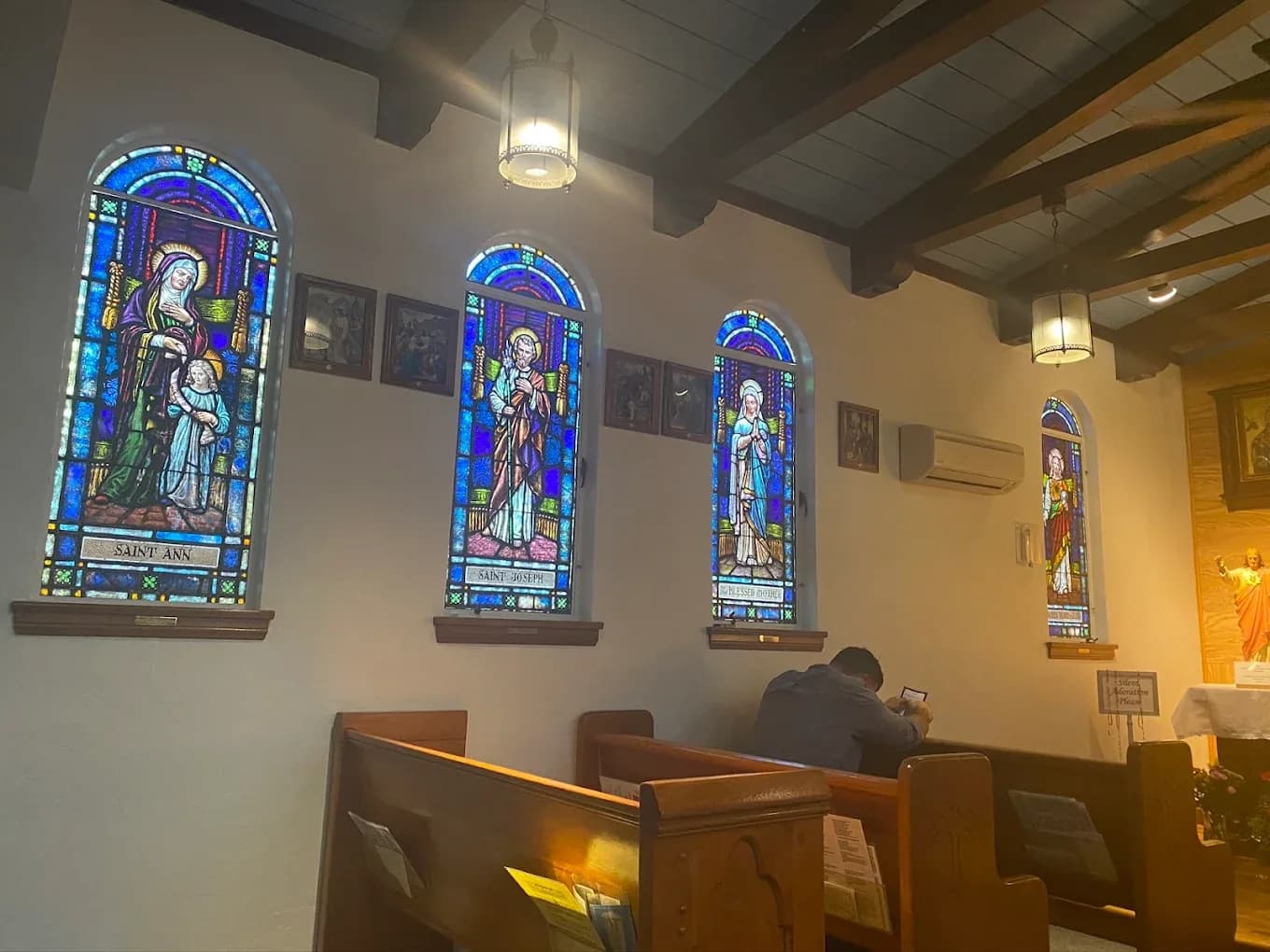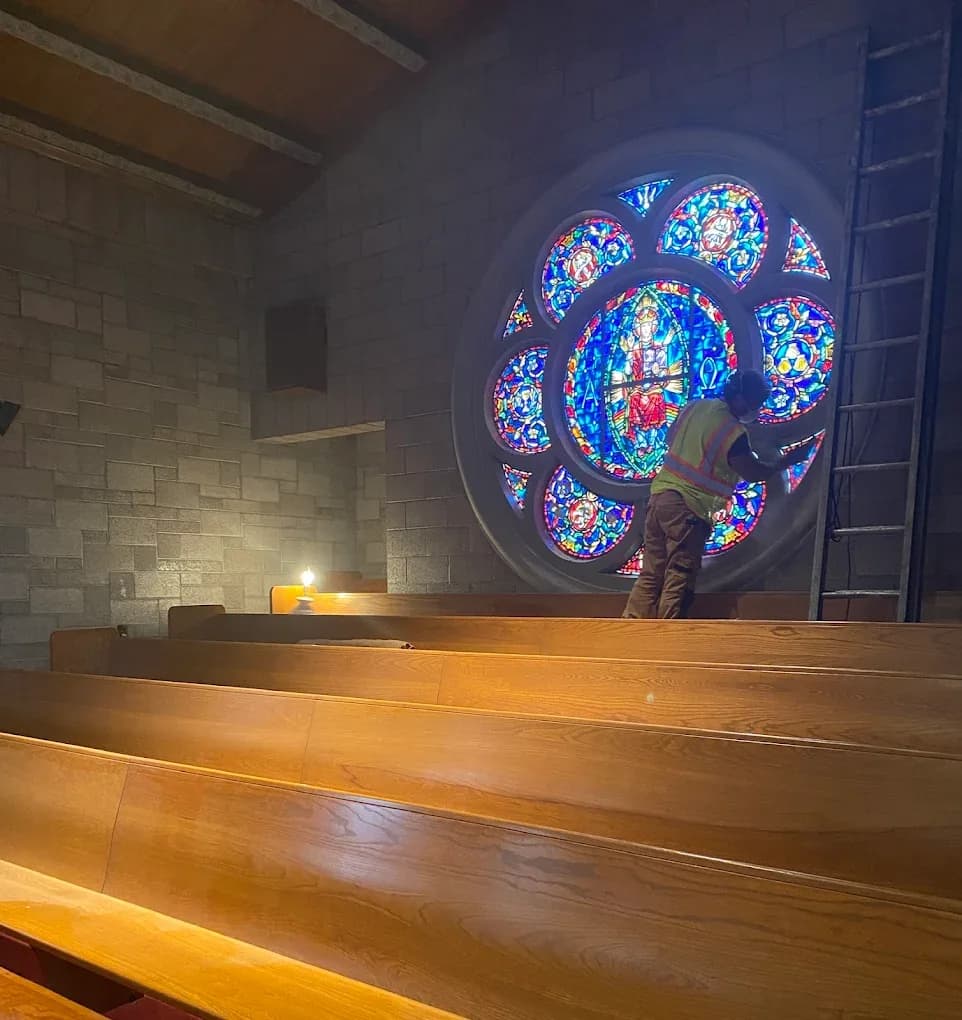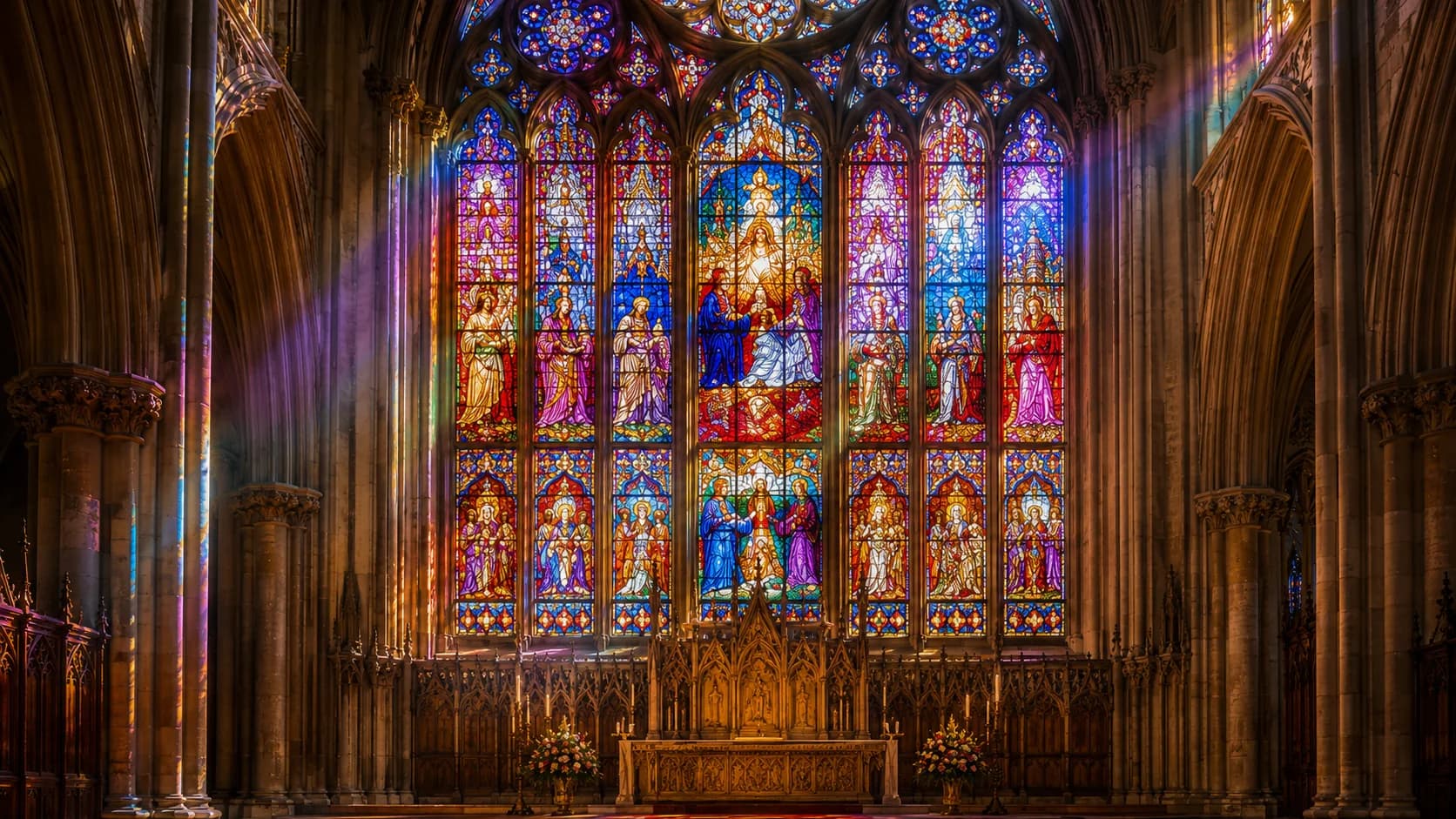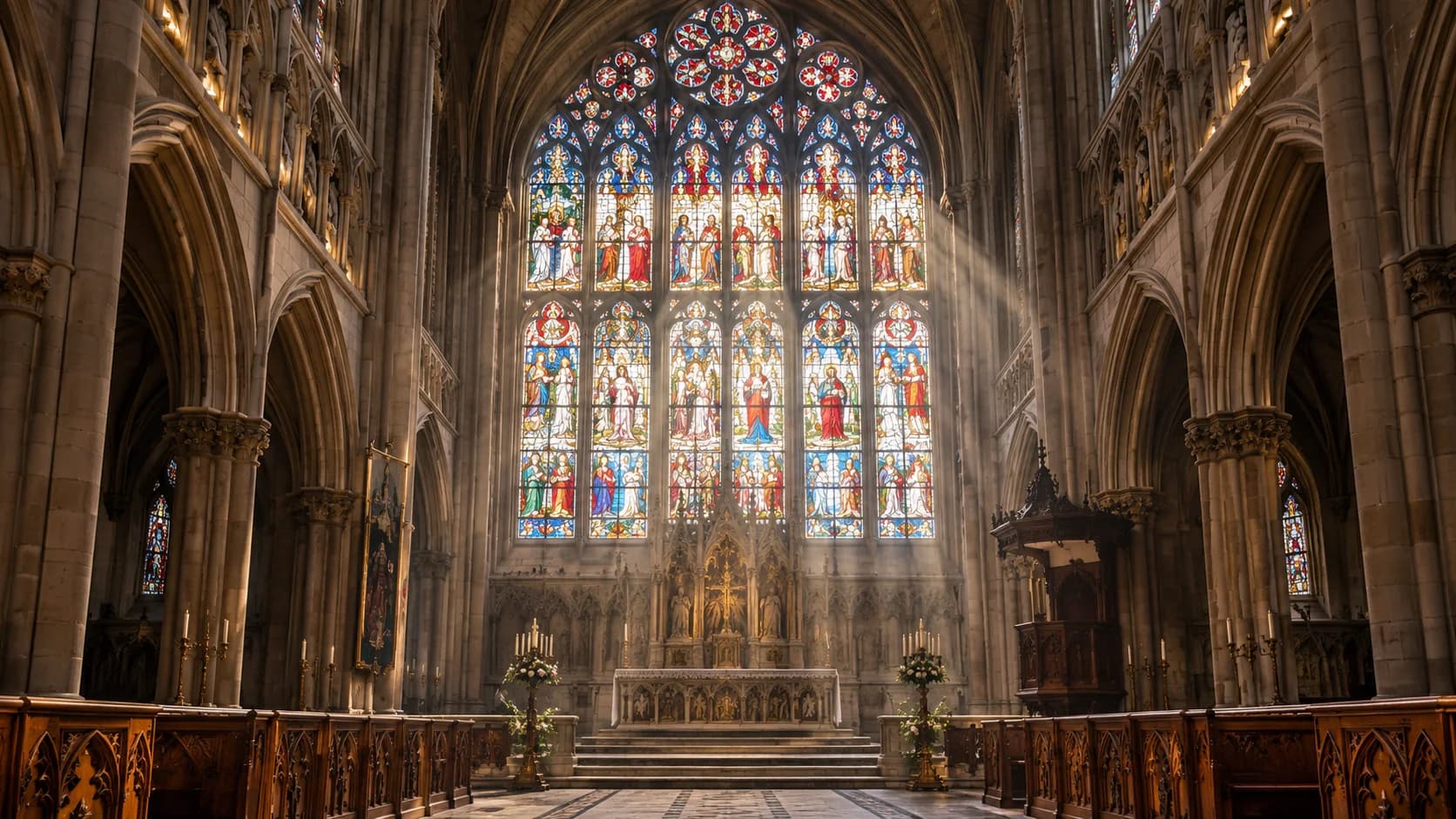

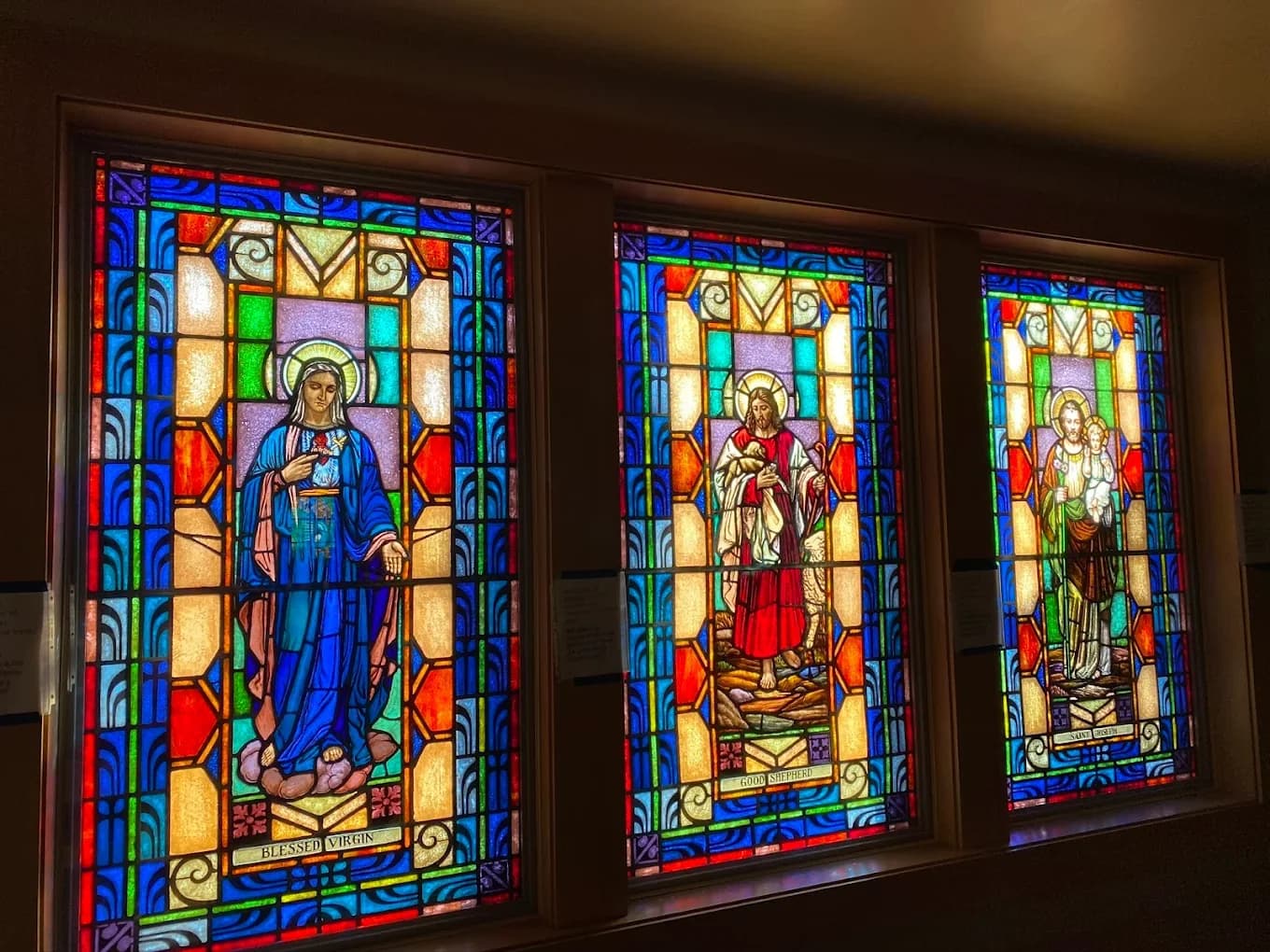
Stained glass in mausoleums and memorial spaces carries emotional weight. The windows often contribute to remembrance, quiet, faith and family history. Restoration and protection should be handled with technical care and respect for the space.
Memorial windows need both sensitivity and structure
A memorial window may be visited by families who associate the glass with loved ones. Work should be planned so the purpose of the space is respected, access is controlled and communication is clear.
At the same time, stained glass in memorial settings may face age, weather, vandalism, limited ventilation and difficult access. Sentiment cannot replace structural assessment.
- Respect for visitors and families
- Clear scheduling
- Protection of interior surfaces
- Safety around fragile glass
- Documentation for property records
Common conditions in memorial stained glass
Memorial windows may show dust, discoloration, cracked pieces, bowed panels, failed waterproofing or damage behind exterior protection. Because some spaces are not occupied daily, problems can progress before they are noticed.
Regular observation helps identify changes before urgent repair is needed.
- Cracked or missing pieces
- Loose lead or rattling
- Condensation behind covers
- Water stains
- Dimming from surface buildup
Why safety glass may be considered
Protective or safety glass may be evaluated after restoration, vandalism concerns or repeated exterior exposure. The system should be planned for appearance, ventilation, drainage and future access.
A cover that prevents inspection or traps moisture can undermine the purpose of protection.
- Impact reduction
- Weather exposure
- Ventilation path
- Exterior appearance
- Maintenance access
Document the restoration record
Memorial properties benefit from clear project records. Photographs, treatment notes, window locations and future maintenance guidance help staff and families understand what has been preserved.
If donor names, dedications or symbolic details are present, they should be documented before work begins.
- Window location and dedication
- Condition photographs
- Treatment notes
- Before and after images
- Care recommendations
How to begin a memorial project
Send photographs of the window, surrounding space, exterior side and any damage. Include the property city, approximate dimensions, access notes and whether the space is actively used by visitors.
The first review should identify whether the need appears to be cleaning, targeted repair, full restoration, safety glass installation or a combination of treatments.
- Full-window views
- Close-ups of damage
- Exterior protection photos
- Access limitations
- Visitor or scheduling considerations
Yes, safety glass installation can be evaluated, but ventilation, drainage, access and appearance should be considered.
Cleaning should follow condition review. Fragile panels or painted details may require special care before any cleaning method is chosen.