
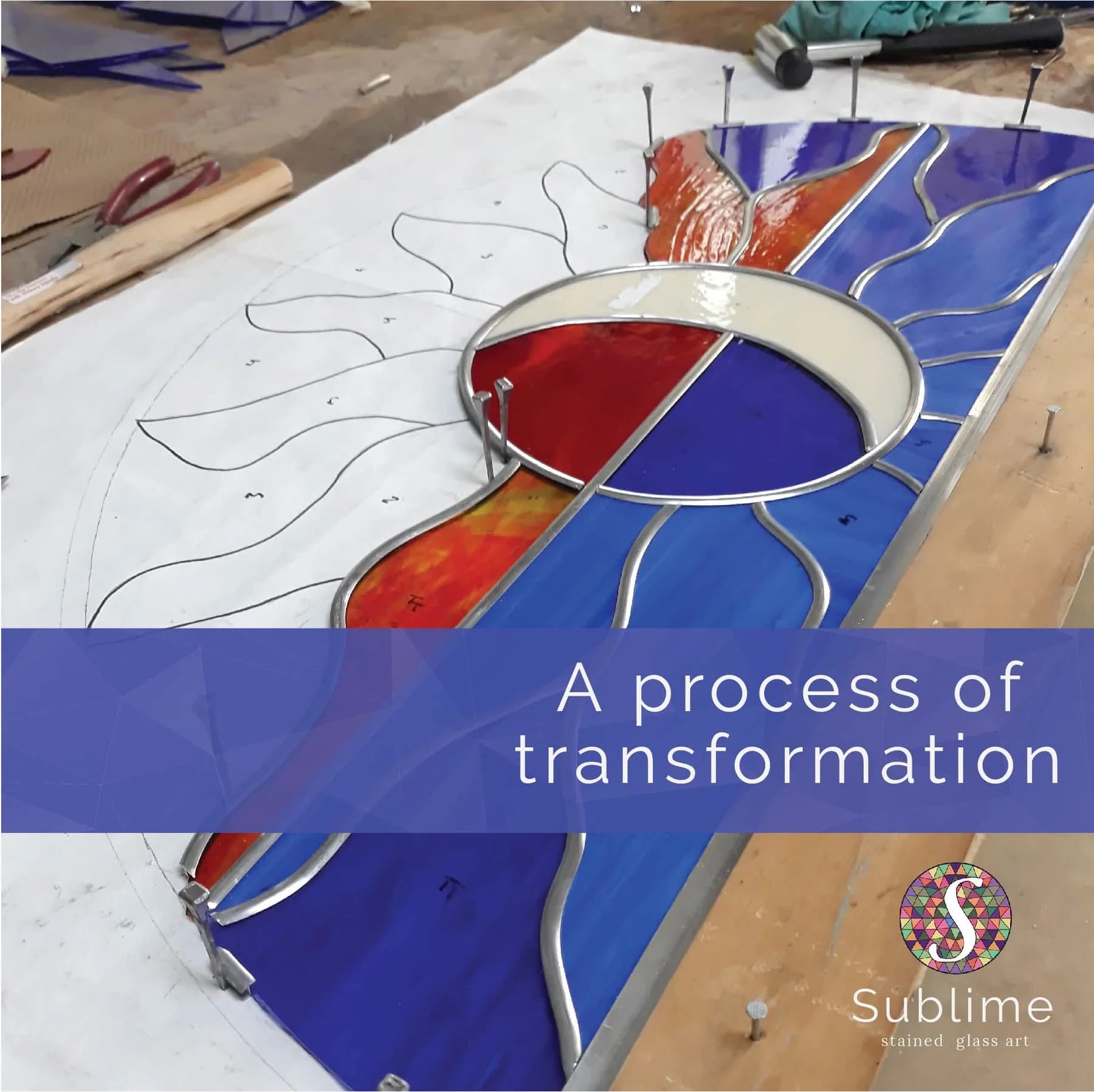
Lead came and solder joints form the network that holds many stained glass windows together. When that network weakens, the window may bow, rattle, crack or leak. Releading and resoldering are different interventions, and each should be chosen according to the condition of the whole panel.
What lead came does
Lead came is the channeled material that holds individual glass pieces in many traditional stained glass windows. It provides shape and flexibility while distributing loads across the panel.
Over many years, lead can fatigue, stretch, oxidize or lose the cement that helps secure the glass and weatherproof the panel.
- Holds glass pieces in place
- Defines the linework of the design
- Allows controlled flexibility
- Works with solder joints and support bars
When resoldering may be enough
Resoldering may address localized failed joints when the surrounding lead remains stable. It is not a cure for an entire panel whose lead network has stretched or weakened.
A failed solder joint should be evaluated in context. If many joints are failing, the issue may be broader than individual intersections.
- Localized joint failure
- Stable lead lines
- No widespread bowing
- Limited movement around the repair area
When releading becomes necessary
Releading involves disassembling the panel, cleaning and retaining appropriate glass, replacing the lead network, soldering, cementing and reassembling the panel for installation. It is more involved than a surface repair.
The process is often considered when a panel has widespread lead fatigue, serious bowing, loose glass, failing cement or repeated repairs that no longer hold.
- Widespread lead fatigue
- Bulging or sagging panels
- Loose glass throughout the window
- Failed waterproofing
- Historic panels needing complete stabilization
Support bars and ties matter
Even a releaded panel needs proper support. Support bars, saddle bars, ties and frame interfaces help prevent future movement. If those elements are missing, corroded or loose, the window may begin failing again.
A restoration plan should describe not only the lead network but also how the panel will be supported after reinstallation.
- Support bar condition
- Tie attachment
- Frame stability
- Panel size and weight
- Wind and building movement
Questions to ask about leadwork
Ask whether the recommendation is localized resoldering, partial releading or complete releading. Ask what original material will be retained, how glass will be documented and how the panel will be supported.
Clear answers help owners understand whether the work addresses symptoms or the structural cause.
- Why is releading recommended?
- Can any lead be retained?
- How will panels be labeled?
- Will support bars be reviewed?
- What documentation is included?
No. Resoldering addresses solder joints. Restoration may include disassembly, cleaning, glass repair, releading, reinforcement and reinstallation.
No material lasts forever. Lead can fatigue over time, especially in large panels or windows exposed to movement and weather.