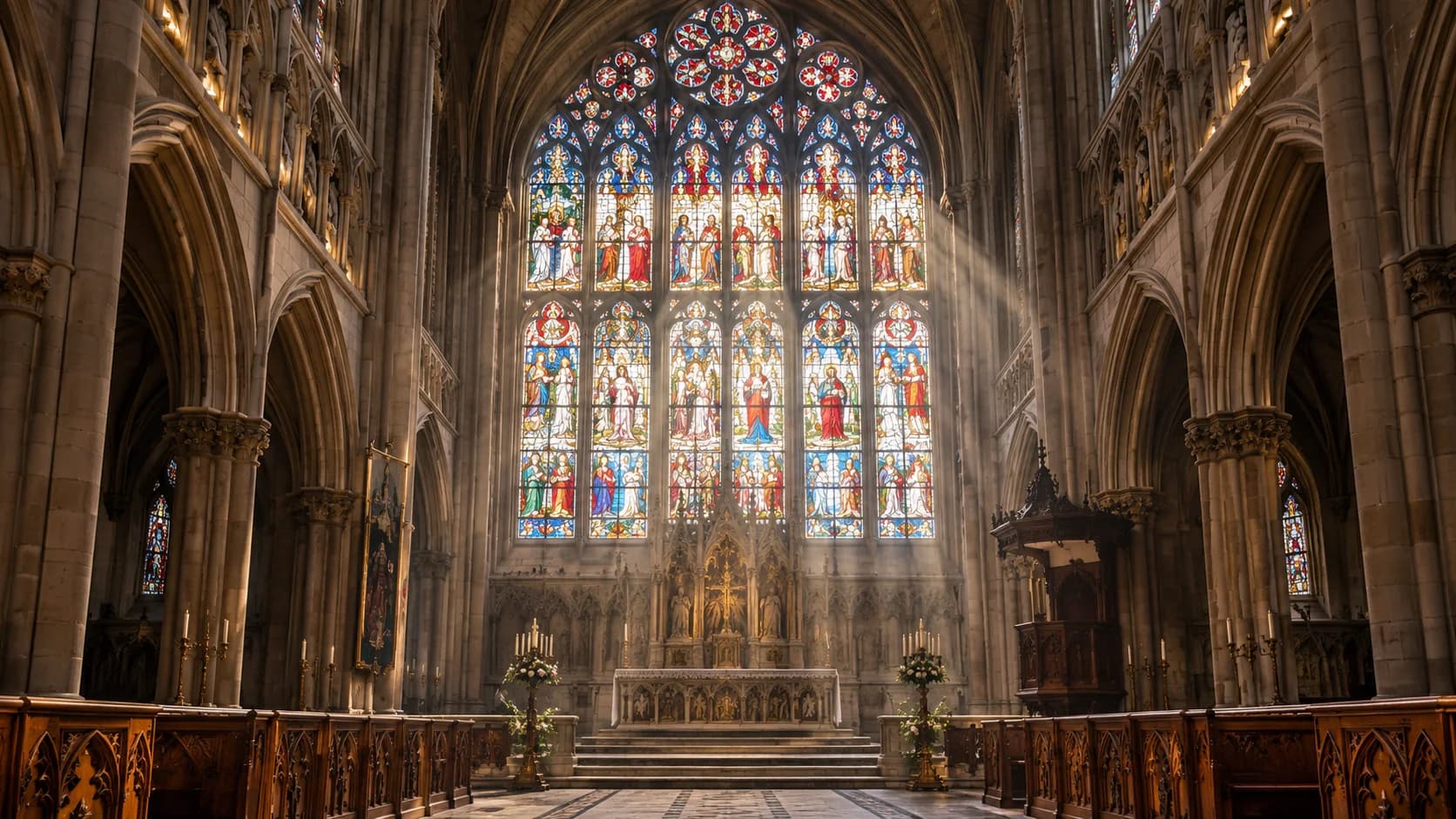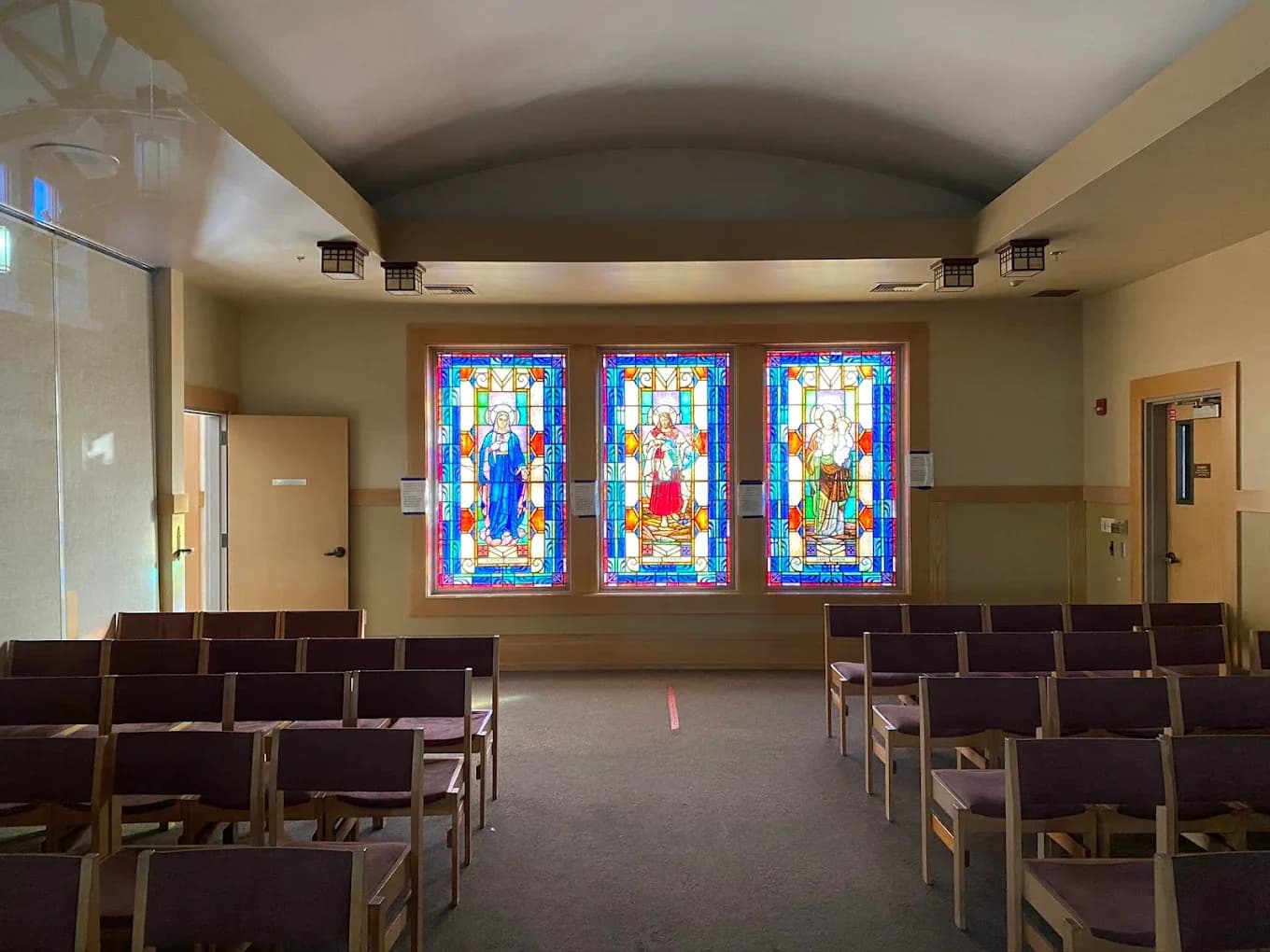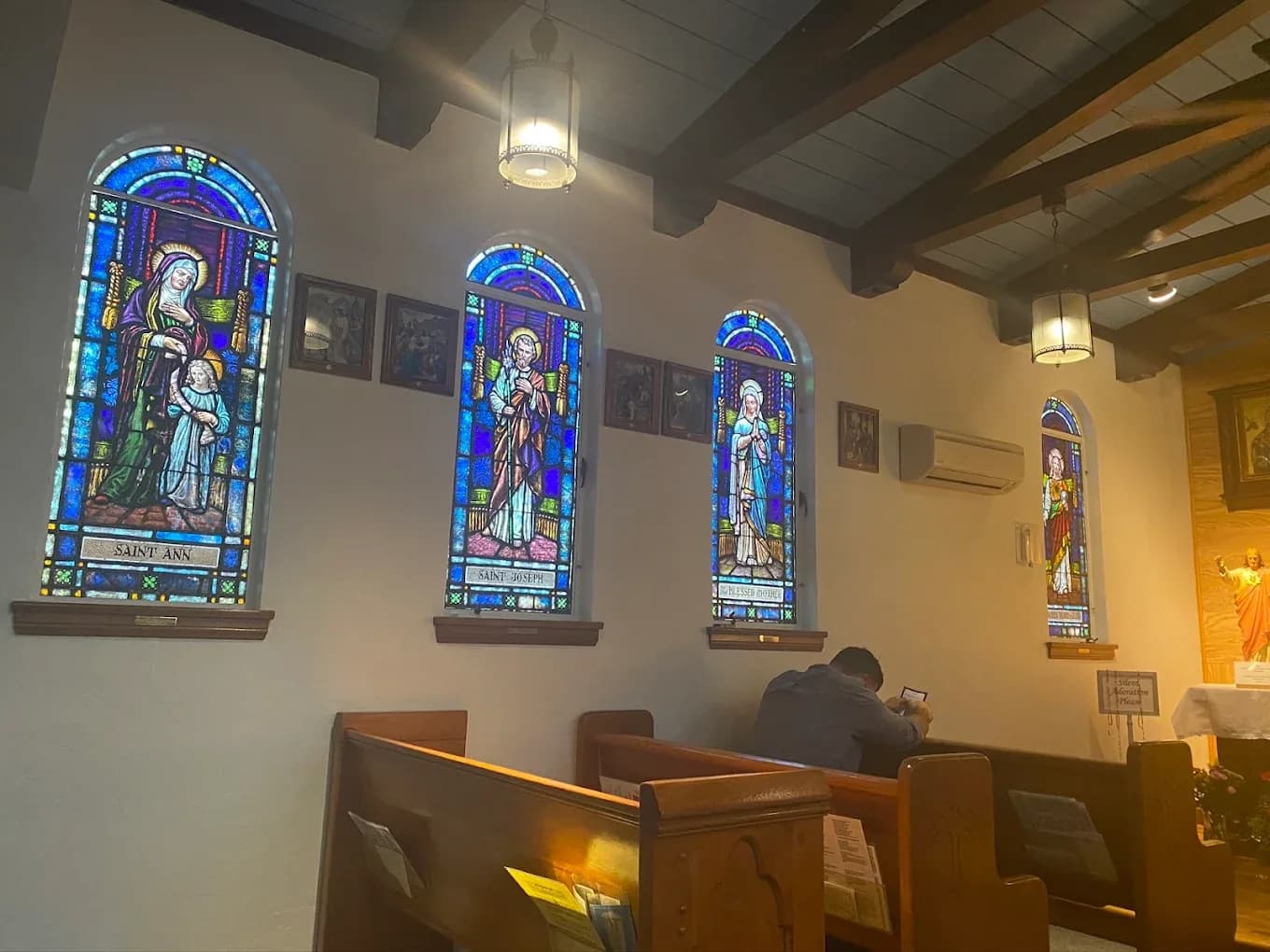

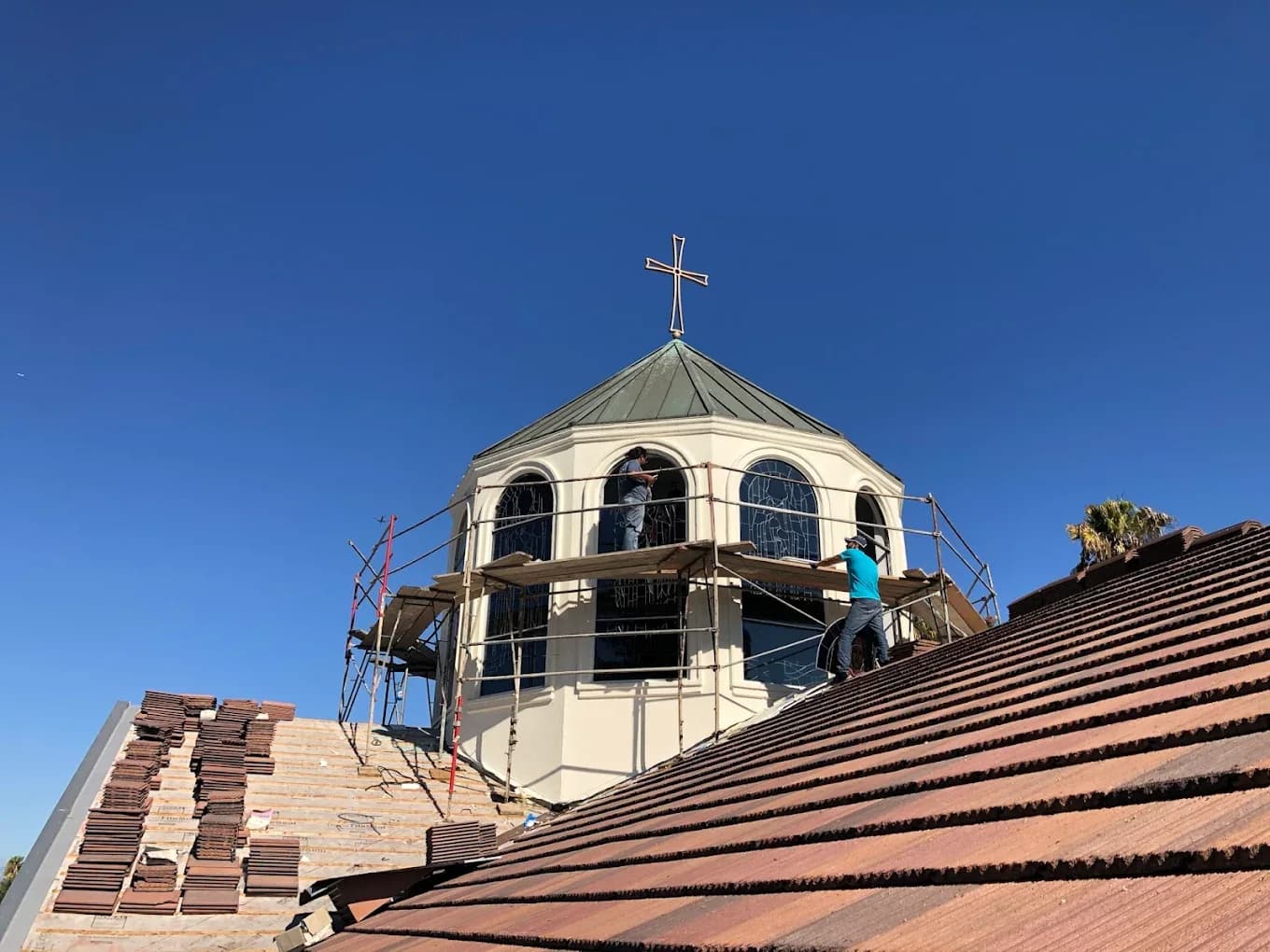
Southern California buildings experience movement from earthquakes, settlement, wind and temperature changes. Stained glass may not fail immediately after movement, but stress can appear later as cracks, rattling, daylight gaps or distortion. Careful documentation helps separate cosmetic changes from structural concerns.
Check safely before touching anything
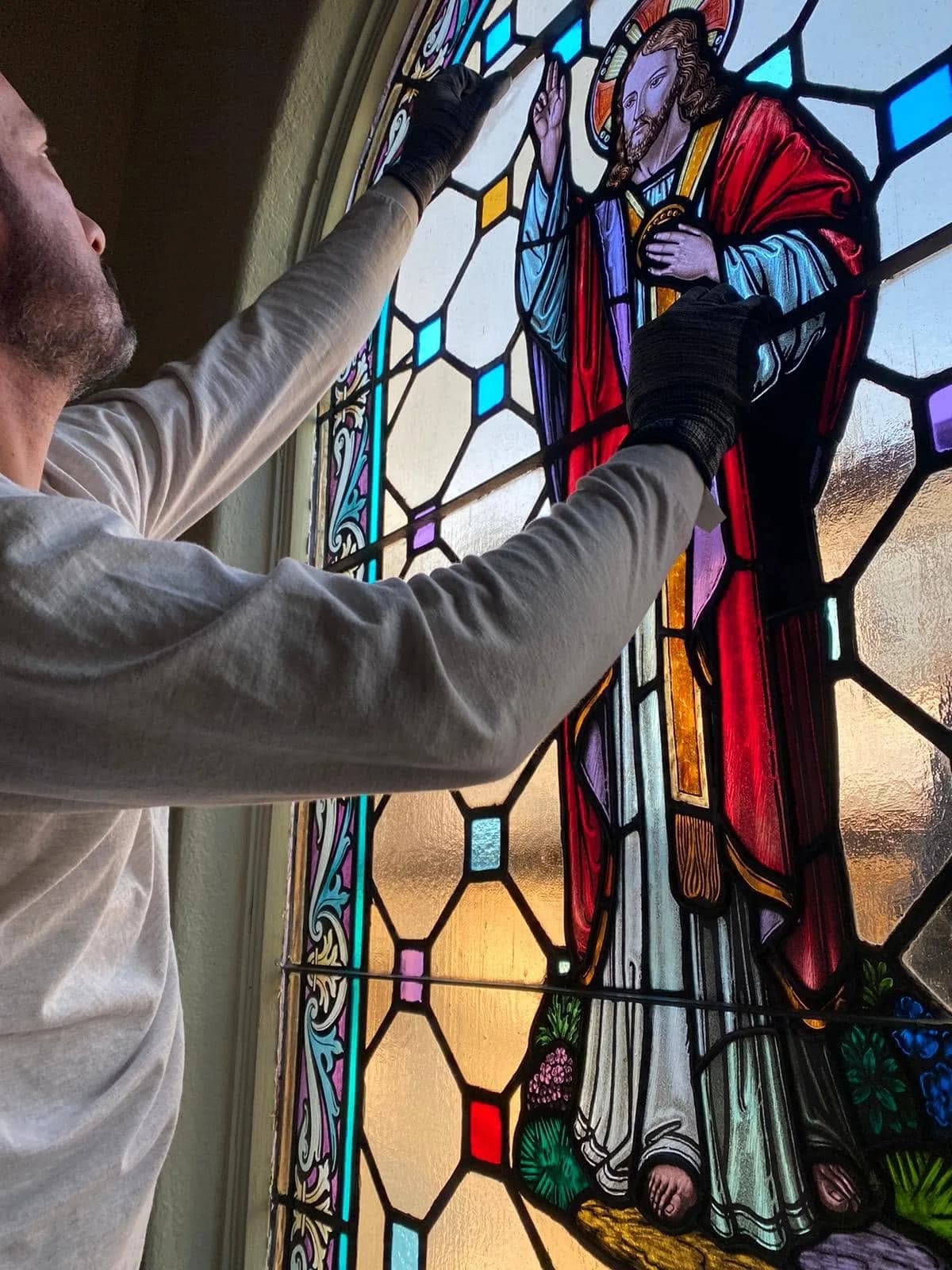
After noticeable building movement, safety comes first. Do not press on loose panels, pull fragments or stand below unstable glass. If pieces appear loose, limit access until the area is reviewed.
Photographs from a safe distance can still provide useful information without disturbing the window.
- Avoid touching unstable glass
- Keep people away from falling hazards
- Photograph from safe positions
- Preserve fragments only when safe
What movement can do to stained glass
Stained glass is made of many pieces connected by a flexible network. That flexibility is useful, but repeated or sudden movement can stress solder joints, lead lines, support ties, perimeter edges and frames.
Damage may appear as a new crack, a panel that no longer sits flat, a rattle in wind or daylight around the perimeter.
- Cracked pieces near stress points
- Bowed or shifted panels
- Loose ties or support bars
- Perimeter gaps
- New rattling or movement
Compare with older photographs
If the church, institution or property has older photographs, compare them with current images. A change in the panel shape, new cracks or shifted borders can be easier to recognize side by side.
Photo comparison is especially useful for committees and property managers who may not see the window every day.
- Same angle before and after
- Close-ups of changed areas
- Exterior and interior views
- Date and event notes
Frame and building conditions matter
A stained glass issue after movement may involve the surrounding building opening. Frames, masonry, wood, steel and waterproofing should be considered as part of the review.
A stained glass specialist may recommend coordination with a building professional if movement appears to originate in the structure rather than the panel alone.
- Cracked plaster or masonry
- Frame distortion
- New water entry
- Doors or windows nearby that no longer operate normally
When to request a condition review
Request a review if glass is loose, cracks appear suddenly, a panel bows, the window rattles, water enters or fragments are found. Even if no emergency exists, documenting the condition can support future maintenance planning.
The goal is not to create fear after every movement event; it is to identify real changes early enough to plan responsibly.
- Visible new damage
- Fallen fragments
- Change in panel shape
- New leaks or rattling
- Concern from staff or building users
Not every minor event requires a full inspection, but visible new damage, looseness, rattling, leaks or shape changes should be documented and reviewed.
Stress may appear over time, especially if supports, frames or lead networks were already vulnerable.