
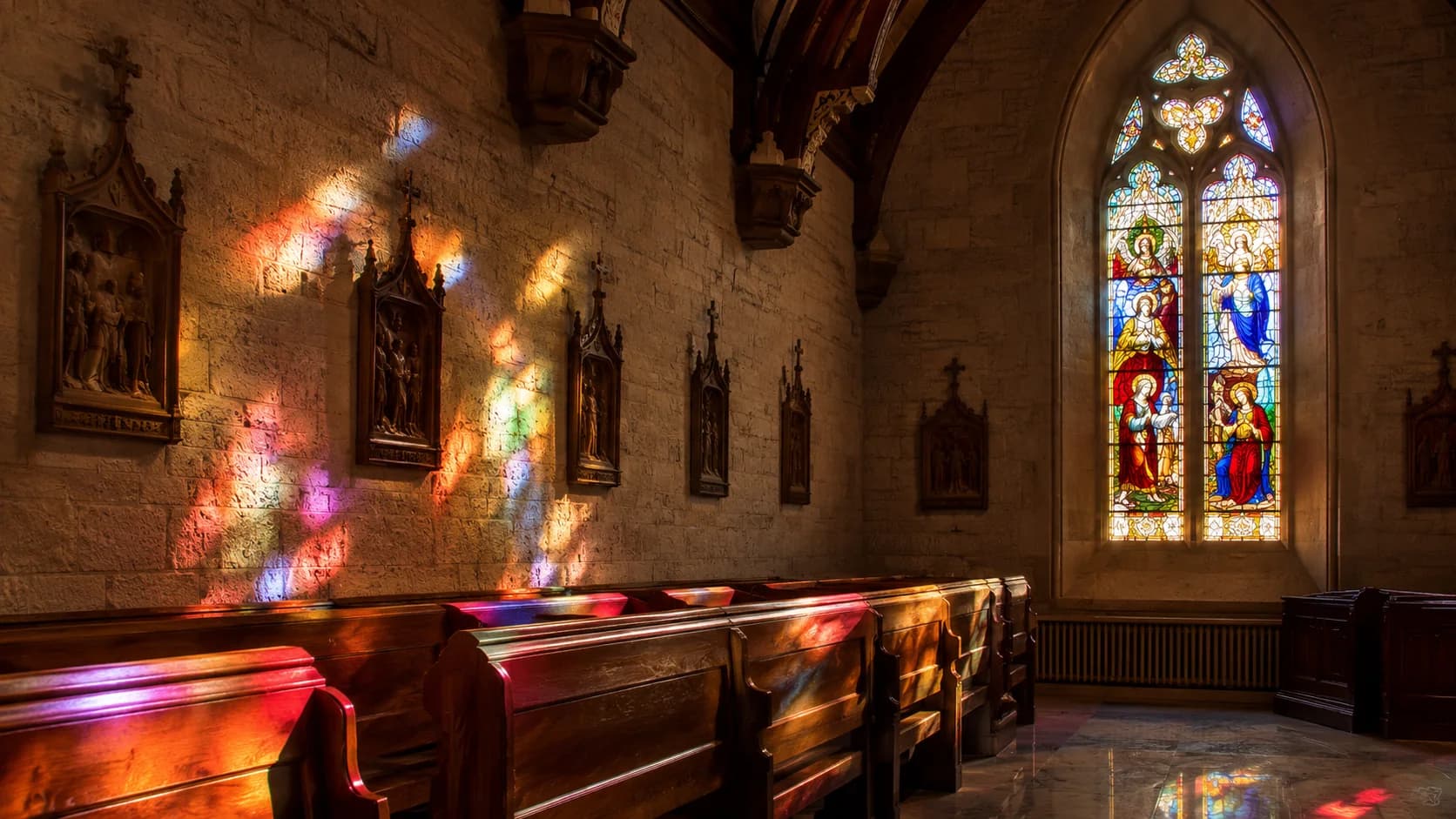
Water around stained glass is not always caused by the stained glass itself. The source may be failed cement, perimeter gaps, exterior covers, surrounding frames, masonry, roofing, flashing or condensation between layers. The correct repair depends on finding the actual path of moisture.
Look for patterns, not just wet spots
A damp sill after heavy wind-driven rain suggests a different issue than condensation that appears between stained glass and safety glass installation. Stains below one corner may indicate a perimeter problem, while widespread moisture may involve the exterior assembly.
Photograph when the issue appears and note the weather conditions. Timing can help separate rain intrusion from condensation.
- When does the moisture appear?
- Is it inside, outside or between layers?
- Does it follow storms, temperature changes or cleaning?
- Is there damage to wood, plaster, stone or metal nearby?
Failed cement and lead movement
Traditional stained glass panels rely on cement or putty-like waterproofing within the lead channels. As that material ages, it can dry, crack or loosen. If the panel also moves, gaps may open around glass pieces or the perimeter.
Water problems are often connected to structural condition. Sealing the surface without addressing movement may trap the symptom rather than correct the cause.
- Loose cement
- Rattling glass
- Bowing panels
- Cracks near lead lines
- Daylight at the perimeter
Safety glass installation can help or hurt
A well-designed protective system can reduce direct weather exposure. A poorly ventilated or damaged system can trap moisture, create condensation and conceal problems until they worsen.
The stained glass and exterior protection should be reviewed together. Removing or replacing exterior covers without understanding the panel behind them can lead to incomplete recommendations.
- Fogging or moisture between layers
- Cracked exterior cover
- Blocked drainage
- No ventilation path
- Difficult inspection access
Frames and surrounding building materials matter
Stained glass sits within a larger building opening. Metal corrosion, wood rot, masonry cracks, failed sealants or roof and flashing problems can all direct water toward the window.
A stained glass assessment may identify where coordination with a general contractor, roofer, glazier or building maintenance team is necessary.
- Rusted steel
- Soft wood
- Cracked masonry
- Failed caulking
- Deteriorated sill or flashing
What to send before requesting help
Include full-window photographs, close-ups of wet areas, exterior views, weather notes and any history of previous repairs. If the water appears only at certain times, record those conditions.
Avoid applying sealants randomly. Products that look helpful at first can block drainage, hide movement or make future restoration harder.
- Photos during and after moisture appears
- Interior and exterior angles
- Weather and timing notes
- Previous repair history
- Approximate size and access information
No. Moisture may come from the panel, frame, safety glass installation or surrounding building. The source should be assessed before choosing a treatment.
Random sealants can trap moisture or hide movement. It is better to document the condition and request a project-specific review.