Sublime Stained Glass
Serving Southern California • English & Spanish consultations
Sublime Stained Glass
REFERENCE GUIDE
A clear vocabulary helps owners, committees, architects and property managers discuss stained glass condition without confusing repair, restoration, conservation and protection.
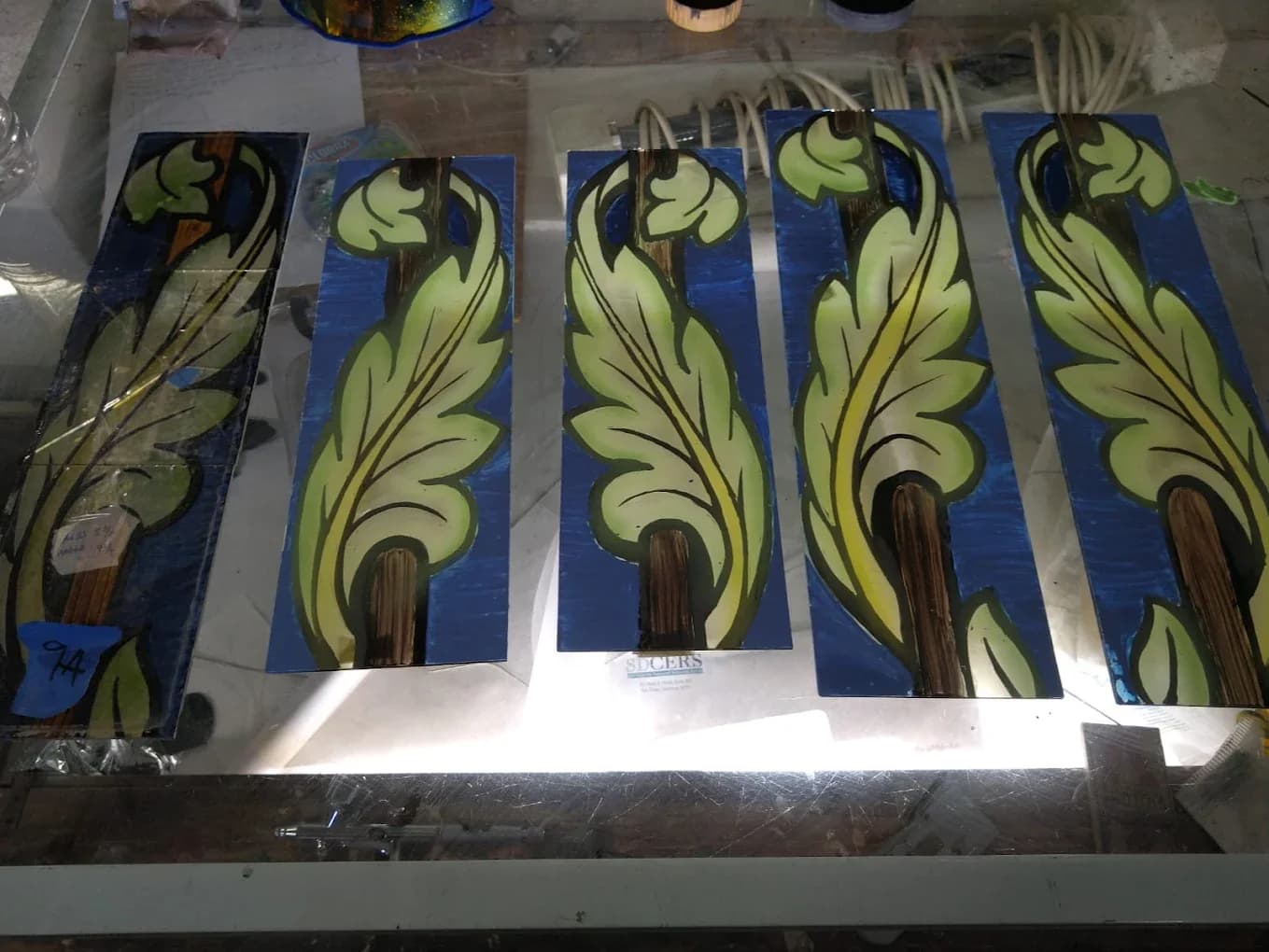
Focused work that addresses a specific damaged section, broken glass, loose solder joint or localized issue without rebuilding the full panel.
A more complete process that may involve removing a panel, documenting it, disassembling weakened areas, replacing failed lead came, repairing glass and reinstalling the restored assembly.
A preservation-minded approach that emphasizes retaining original material and minimizing unnecessary intervention, especially for historic or artistically significant windows.
The grooved lead strips that hold pieces of stained glass together within a traditional panel.
The joined point where lead came sections meet and are bonded. Failed solder joints can contribute to panel weakness.
A visible curve or distortion in a stained glass panel that can indicate structural stress, lead fatigue, support failure or long-term pressure.
An added exterior layer intended to reduce impact and weather exposure. It must be designed with ventilation and moisture control in mind.
A reinforcing bar attached to a stained glass panel to help distribute weight and reduce movement.
Replacing deteriorated lead came in a stained glass panel, usually after documentation and careful disassembly.
Repairing or strengthening solder joints where the existing condition allows focused intervention.
A project review performed at the property to evaluate condition, access, safety, dimensions, exposure and scope.
The careful process of taking stained glass out of its setting, transporting it for work when needed and returning it to the opening.
Start with what you know
Send photographs and a few project details. We’ll review the information and contact you to discuss the appropriate next step.
English & Spanish consultations • 661-406-0612